Video
Kontakt
Redaksia
[FULLNAME_CUT]
Hyni
Editorial
Speciale
Mendime
Intervista
Kulturë
Udhëpërshkrim
Faleminderit
Vërtetësi
Përjetësi
Sport
Shtesë
Redaksia
Video
Kontakt
[FULLNAME]
Hyni
Editorial
Speciale
Mendime
Intervista
Kulturë
Udhëpërshkrim
Faleminderit
Vërtetësi
Përjetësi
Sport
Shtesë
Shtesë
Shoqëria
Historia
Shkenca
Video
English
Lajme
Fotaq Andrea: Livre d'or d'auteurs français sur les Albanais
L’anthologie « Livre d’Or d’auteurs français sur les Albanais », qui embrasse une période de près de sept siècles, apparaît dans nos jours comme une couronne de lauriers...
When the Great Powers Decided the Fate of the Balkans: The Consequences of the Treaty of Berlin for the Albanians
Isuf B. Bajrami - "History knows few moments when a nation has been judged without being present in the hall where the decision about its fate was being made. For the Albanians, the Congress of Berlin was one of those moments." On July 13, 1878, after a month of negotiations held in Berlin, representatives of the...
The New European Security Order: NATO, Russia, Serbia, and Hybrid Challenges in the Era of Strategic Competition
Isuf B. Bajrami - A Study on the Transformation of the European Security Architecture and Its Impact on the Western Balkans - This study analyzes the transformation of the European security order in the period following the end of the Cold War, with particular emphasis on the Western Balkans and the interaction among NATO, the Russian Federation, Serbia, and regional...
Democracy Does Not Stop at the Border
Isuf B. Bajrami - If citizens are prevented from exercising their right to move freely or to participate in democratic life because of their political beliefs, then it is not only the Constitution and freedom of movement that are being violated, but also the very foundation of the rule of law, democracy, and the international commitments Albania has undertaken to protect fundamental freedoms...
Sovereignty of Kosovo and the Limits of External Political Interference
Isuf B. Bajrami - The Republic of Kosovo, as an independent and sovereign state, exercises its constitutional and legal authority in accordance with the fundamental principles of international law. In this sense, any debate concerning international agreements, the dialogue with Serbia, or the strategic orientation of the state must be analyzed through the prism of state sovereignty and the right of the people...
The Distortion of Public Reason in Political Discourse: Logical Fallacies and the Shift from Argument to Personalization of Debate
Isuf B. Bajrami - Based on theories of argumentation, political communication, and political philosophy (Habermas and Arendt), this study examines how ad hominem, straw man, and red herring function not only as logical fallacies but also as strategic mechanisms for constructing public perception. The analysis is grounded in...
The Plis at the Forefront of the Protest in Tirana: Beyond Day-to-Day Politics
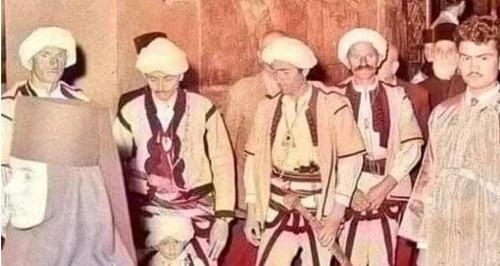
Isuf B. Bajrami - In the photographs and footage coming from the protests in Tirana, one element stands out in particular: the plis. Present at the forefront of the young people protesting, it appears not merely as a piece of traditional Albanian attire, but as a symbol carrying historical memory, cultural identity, and a message that goes...
Public Protest, Democratic Order and Legal Responsibility
Isuf B. Bajrami - Public protest constitutes one of the most important institutions of contemporary democracy. Through it, citizens exercise the right to express political, social, economic or ideological positions, directly participating in public life beyond the classical mechanisms of political representation. In this sense, protest is not only...
Between Power and Hope
Isuf B. Bajrami - If there is one truth that has traveled through the centuries almost unchanged, it is that the struggle for power rarely ends. Names change, flags change, systems change, and slogans change, yet the same cycle remains: someone strives to preserve power, while someone else strives to obtain it...
Protest for Dignity, Land, and the Rule of Law
Isuf B. Bajrami -There are moments in the history of a nation when silence becomes complicity. There are moments when citizens do not take to the streets for political interests, privileges, or personal gain, but because they feel that something far more sacred is being threatened: their land, their dignity, their honor, and their right to live freely in their own country...
Isuf B. Bajrami: 27 Years of Freedom – June 12, the Day That Forever Changed Kosovo's Destiny
Isuf B. Bajrami - Today, with pride, respect, and deep gratitude, we commemorate June 12, 1999—the day when NATO and KFOR forces entered Kosovo, marking the end of a dark period of violence, terror, and state repression by the Serbian regime against the Albanian population of Kosovo, and the beginning of an era of freedom, peace, and hope for the future...
The League of Prizren (1878): The Awakening of National Consciousness and the Historical Path toward Albanian State Sovereignty
Isuf B. Bajrami - The League of Prizren (1878) constitutes one of the most important moments in Albanian political history and in the process of shaping their national consciousness. It should not be understood simply as an isolated historical event, but as a complex political, social, and diplomatic process, which developed during...
From George Washington to Kosovo: The Victory Over Oneself
Isuf B. Bajrami - What would have happened to America if George Washington had chosen power over the republic? The question may seem hypothetical, yet its answer reveals a profound historical truth. At the end of the struggle for independence, Washington enjoyed extraordinary authority. He was the hero of the nation, the victorious commander, the man whom citizens trusted more than...
The North That Speaks with the Voice of Pain: A Call That Must No Longer Remain Silent
Isuf B. Bajrami - Sister Adelina Marku raises alarm over the difficult conditions in Albania's remote areas: "Health cannot be a matter of fate, but a right". There are moments when words are no longer just words. They become pain. They become prayer. They become a call that rises from the depths of the earth and...
The Unresolved Issue of Chameria Requires a Solution
By Isuf B. Bajrami - The visit of Greece's Foreign Minister, Nikos Dendias, to Tirana and his meeting with Prime Minister Edi Rama brought back into focus one of the most complex and controversial issues in Albanian–Greek relations: Chameria. At a time when both states declare a shared Euro-Atlantic orientation and aim to strengthen their...
Popular Sovereignty as the Foundation of Constitutional Legitimacy and the Control of Political Representation in the Republic of Kosovo
Isuf B. Bajrami, This article addresses popular sovereignty as a fundamental principle of the constitutional order in the Republic of Kosovo and as a structural limitation on the exercise of political power. Drawing on the political philosophy of Abraham Lincoln, the classical doctrine of the social contract, and contemporary principles of...
Escalation of Russian Aggression Toward NATO Borders: The Incident in Romania and the Risk of Euro-Atlantic Destabilization
Isuf B. Bajrami - The recent strike on Romanian territory by a drone linked to Russian military operations represents not merely an isolated security incident, but an alarming signal of the growing strategic risk along NATO's eastern borders. The attack on a residential apartment block near the Romanian-Ukrainian border has significantly...
Police operation or intimidation of citizens?
Isuf B. Bajrami - The incident reported in Haraçinë has caused significant public concern and has brought renewed attention to the issue of police use of force in civilian residential areas. According to field reports and citizens' testimonies, the police intervention, accompanied by the presence of armed units and alleged use of firearms in
Political-Diplomatic Analysis of Zeta Municipality’s “Non-Recognition” of Kosovo and Russian-Serbian Influence in Montenegro
The declaration adopted by the Municipality of Zeta, politically supported by Milan Kneževi? and pro-Serbian political segments in Montenegro, represents an episode of multidimensional legal, constitutional, diplomatic, and geopolitical significance in the Western Balkans. From a strictly formal legal perspective, this is a symbolic...
The Frauds of the Serbian Orthodox Church Regarding Autocephaly and Their Consequences for the State of Kosovo
Jusuf Buxhovi - The rise of the hegemonic Serbian state, beginning with autonomy in 1830 (on the scale of the Pashalik of Belgrade) and recognition as a state at the Congress of Berlin in 1878, culminating in its expansion into Albanian lands during the Balkan Wars of 1912–1913—when Kosovo and Macedonia were recognized as Serbian...
North Macedonia and Serbian Influence
Isuf B. Bajrami - "Serbian World", Political Networks, and Information Warfare in the Balkans In recent years, North Macedonia has become one of the most sensitive arenas of political and geostrategic confrontation in the Western Balkans. While the country remains formally oriented toward Euro-Atlantic integration and is a NATO...
Anti-Memorandum as a Discursive Corpus and International Law
This article analyzes political and intellectual memoranda in Serbia, beginning with the Memorandum of the Serbian Academy of Sciences and Arts (1986), as well as subsequent discourses on Kosovo, through an interdisciplinary approach of international law and Critical Discourse Analysis...
Albanian Sea as an Integrated Strategic Infrastructure
The Albanian maritime space in the Adriatic and Ionian Seas cannot be read as a simple geographical boundary between land and water. It is a functional and dynamic space where historical, legal, economic, and technological layers intersect and operate simultaneously...
Through the "Serbian World" Moscow seeks the institutionalization of the "Russian World" in the Balkans
This article argues that the concept of the "Serbian World" ("srpski svet") functions as an intermediary structure for the projection of Russian strategic influence in the Western Balkans, creating a mid-level layer of influence between Moscow and the Balkan political space. Instead of a linear state-to-state relationship, a multi-layered...
The Mediterranean and the Balkans in the Era of Expanded Warfare: Ukraine and the Reconfiguration of Maritime Corridors
This paper examines the transformation of security in the Mediterranean and the Balkans in the context of the war in Ukraine and recent changes in the international security architecture. The conflict in Ukraine has not only produced military consequences within the Black Sea region, but has also directly affected...
The State of North Macedonia as an Institutional and Asymmetric Bilingual Model
The Republic of North Macedonia represents one of the most complex examples of multietnic state-building in the Western Balkans, where the language issue is not merely a means of communication, but a fundamental element of constitutional order, civic equality, and political stability. In this context, the country is often...
At a time when Europe seeks unity and stability, Serbia deepens strategic ties with Russia
In a period when Europe is facing profound geopolitical transformations and new security challenges, the Western Balkans continues to remain one of the most sensitive regions of global power competition. The war in Ukraine has accelerated the process of reconfiguring the European order, pushing the continent toward...
The United States Is Conducting Tactical Adjustments Within NATO Structures, Not Withdrawing from Germany
At a moment when the security environment in Europe is undergoing its most profound transformation since the end of the Cold War, every movement of U.S. forces on the continent is immediately interpreted as a political and strategic signal. The announced reduction of the United States' military presence in Germany has...
Today is World Press Freedom Day, but Kosovo remains without a single printed newspaper and with a lack of a strong national archiving system
Every year on May 3rd, World Press Freedom Day is observed, a date established by the United Nations General Assembly to emphasize the importance of free, independent, and safe media in democratic societies.[1] This day is not merely
Media Freedom in Kosovo: Between Legal Freedom and Practical Constraints
Media freedom represents one of the fundamental pillars of democratic systems, ensuring institutional transparency, public accountability, and free access to information for citizens. In Kosovo, this freedom is guaranteed by the Constitution and a series of laws regulating media operation and access to public information.
ELIOT ENGEL – A True Friend of Albanians and a Voice for Justice in Kosova
Dear family members, friends, and colleagues -- We gather with sorrow and deep respect to honor the life and legacy of Eliot Engel--a distinguished figure in American public life, but for Albanians everywhere, above all, a trusted and cherished friend. For decades, Eliot Engel served the...
Expulsions of Albanians in the Balkans (1877–1999)
This paper examines the historical processes of displacement of Albanians in the Balkans from 1877 to 1999, situating them within the broader framework of long-term political, state-building, and demographic transformations in the region. By combining political...
International Law and the Use of Force in the Strait of Hormuz: Limits Between Self-Defense and the Prohibition of Unilateral Control
The Strait of Hormuz represents one of the most critical nodes of the global maritime trade and energy system, where the law of the sea and the law of the use of force are directly intertwined. This article analyzes the legal scope of United States action in this strait in light of the United Nations Charter and the,,,
Eliot Engel will forever be remembered as the voice of truth and justice for Kosovo in the United States
His passing marks the loss of an extraordinary individual—a great friend and an unwavering voice who, for decades, gave strength to the just cause of the people of Kosovo. His life and work cannot be defined merely by titles or political roles; they were a mission grounded in deep human...
The Right to Use the Mother Tongue in Higher Education in North Macedonia
The right to use one's mother tongue is a fundamental component of human rights and substantive equality. In higher education, this right guarantees equal participation in the academic process and real opportunities for professional advancement...
1
2
3
4
5
Në Fokus
Gëzim Marku: Intervistë ekskluzive me Prof. Dr. Fejzulla Berishën
Blerim Latifi: Kur bota kishte sytë te Kupa e Botës, ata kishin sytë te Liria
Asllan Dibrani (Luani): Carmen, turistja spanjolle që pastroi Prevallën dhe na dha një mësim qytetarie
Sabile Basha: Roli i mërgatës shqiptare në kujtesën historike të Kosovës (42)
Kastriot Dervishi: Batalioni komunist "Perlat Rexhepi" vrau dhe dogji Atë Lekë Lulin
Llesh Ndoj: Ende… pa krye!
Albert Vataj: "Dasma shkodrane", thesari artit shqiptar, ikona e Kol Idromenos, piktura që përjetësoi në ngjyra shpirtin e qytetit
Shefqet Dibrani: Portreti letrar dhe artistik i një vajze të suksesshme
Florim Zeqa: Zgjedhja e kryetarit përmes Referendumit, akt i kthesës së madhe në LDK!
Gjon Marku: Tregtari i qumështit
Zemra Shqiptare